Wondering whether your next move should keep you in the broader San Fernando Valley or take you up into Porter Ranch? If you are thinking about upgrading your home, this is not just a question of geography. It is really a question of price tier, housing style, neighborhood structure, and what kind of day-to-day setting fits your goals. This guide breaks down how Porter Ranch compares with other Valley options, especially Sun Valley, so you can see where the premium goes and whether it makes sense for your next chapter. Let’s dive in.
Porter Ranch stands apart
If your idea of an upgrade means a clear step up, Porter Ranch deserves a close look. Based on Zillow home value data for Porter Ranch, the average home value is $1,239,736 as of January 31, 2026.
That matters because Porter Ranch is not priced like a small variation on nearby Valley neighborhoods. It sits well above Sun Valley, where Zillow reports an average home value comparison set showing Porter Ranch above several nearby areas, including Sun Valley at $784,079, Granada Hills at $977,688, Northridge at $1,051,027, and Chatsworth at $935,931.
The upgrade premium explained
The biggest difference in this comparison is the size of the premium. Porter Ranch is about $455,657 higher than Sun Valley, which works out to roughly 58.1% more based on the figures in the research report.
Even when you compare Porter Ranch with other nearby Valley neighborhoods, the gap is still meaningful. Porter Ranch is about $262,048 above Granada Hills, $188,709 above Northridge, and $303,805 above Chatsworth. If you are moving up, that tells you Porter Ranch is a distinct market tier, not just the next neighborhood over.
Housing feel in Porter Ranch
According to the City of Los Angeles Porter Ranch overview, Porter Ranch is one of the newer parts of Los Angeles. Major construction did not begin there until the 1970s, which makes it newer than many established San Fernando Valley neighborhoods.
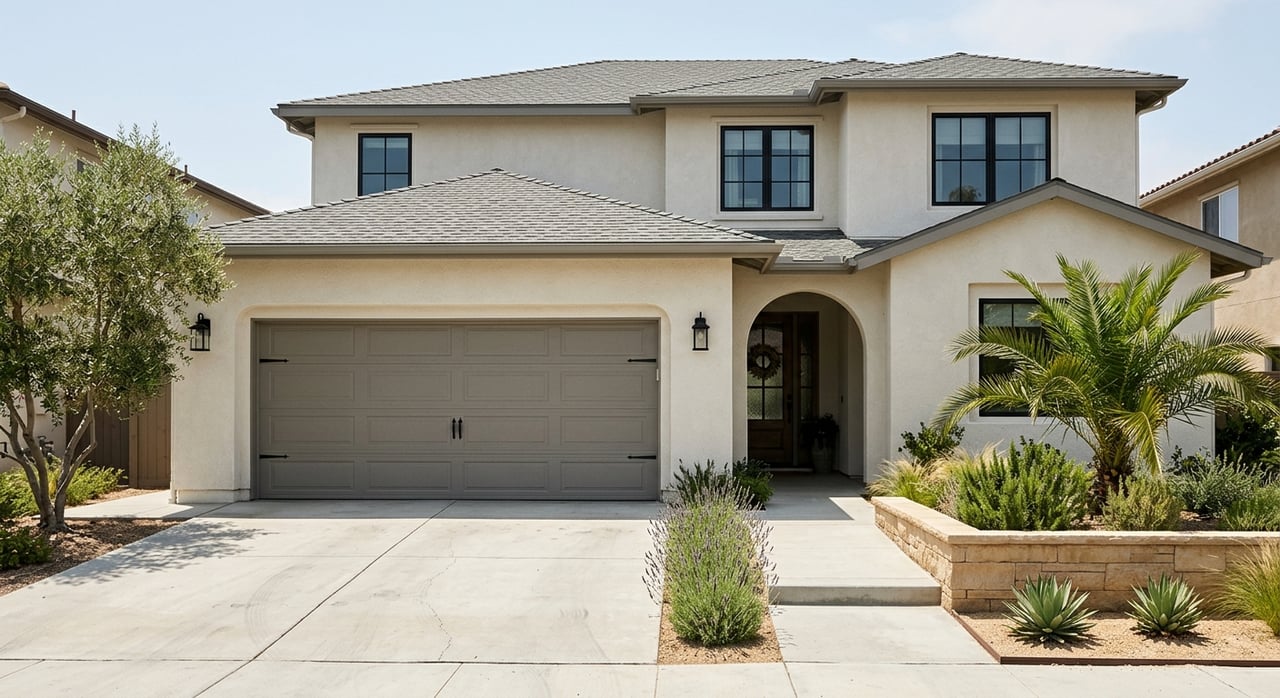
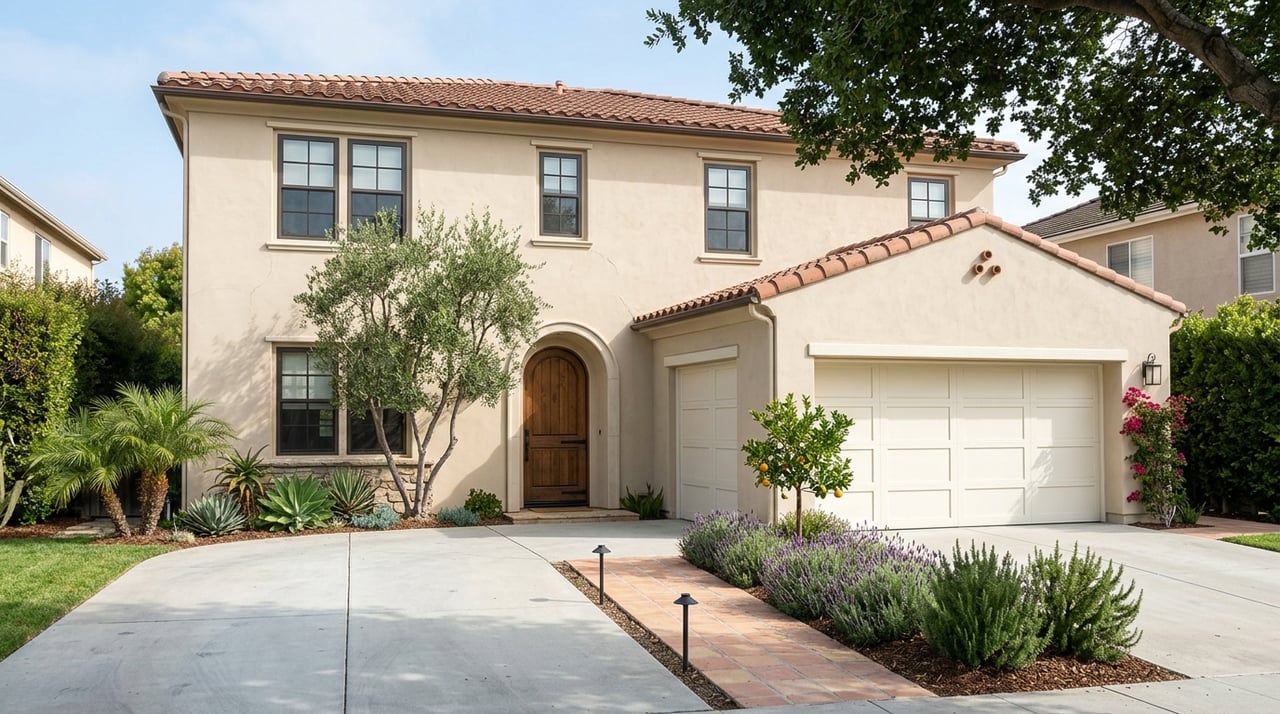
The same city source describes Porter Ranch as largely master-planned, with many gated areas and mostly gated communities of single-family homes. In practical terms, that often means a more consistent housing stock, a more uniform streetscape, and a more controlled neighborhood feel than you may find in older Valley areas.
For many buyers, that is the heart of the upgrade appeal. If you want a setting that feels intentionally planned rather than gradually pieced together over time, Porter Ranch lines up well with that goal.
Newer development still shapes Porter Ranch
Porter Ranch also stands out because newer development is still part of the story. The Andora Subdivision Project includes a 35-lot subdivision with 33 single-family residences on a 91-acre site, with about 70% of the site set aside as open-space conservation easement.
Nearby, Hidden Creek Estates is planned as a gated community with 188 single-family residences, a public park, and an equestrian facility, according to the same planning materials referenced in the research. That reinforces Porter Ranch’s identity as a place where larger-lot, single-family, open-space-oriented development still carries weight.
If your version of upgrading includes newer construction patterns and a neighborhood environment shaped by planned growth, Porter Ranch checks that box more clearly than many older Valley communities.
Sun Valley offers a different value story
Sun Valley is not trying to be Porter Ranch, and that is important to understand. Based on the Sun Valley-La Tuna Canyon Community Plan, the area has a broader land-use mix that includes 26% single-family dwelling units, 22% open space, and 19% industrial space.
That creates a different kind of market experience. Instead of a largely master-planned single-family setting, Sun Valley is more mixed in both land use and housing character.
For some buyers, that variety is a plus. It can mean more price flexibility, a wider range of home types, and pockets with a very different feel from one another. For others, it may feel less consistent than what they want in a move-up purchase.
Older homes and more variety
Sun Valley’s housing story is also older and more eclectic. The community plan notes that the area developed into the Northeast Valley’s industrial base, and early housing included Craftsman-style homes.
One of the clearest examples is Stonehurst, a City Planning HPOZ. City Planning says Stonehurst contains 92 homes, many built between 1923 and 1925, and has the highest concentration in Los Angeles of homes using native river rock as a primary building material.
Stonehurst is also described as having small bungalows on large lots and a rustic character. That is a very different product from newer Porter Ranch subdivisions, which is why Sun Valley works better as a value-and-variety option than as a direct substitute for Porter Ranch.
Schools tell a different story too
If schools are part of your upgrade decision, it helps to stay focused on factual differences in how these areas are set up. In Porter Ranch, Porter Ranch Community School serves a TK through 8 span and highlights distinctions including California Distinguished School, Gold Ribbon School, and School for Advanced Studies.
That supports the idea of Porter Ranch as a more neighborhood-centered, school-anchored option. For buyers who want a move-up home in a community with a defined local school presence, that can be part of the appeal.
Sun Valley has a different profile. Sun Valley Magnet School describes a college- and career-readiness focus, with STEAM middle-school magnet centers and a 9 through 12 Biomedical Sciences, Engineering and Leadership Academy.
In other words, Porter Ranch reads more like a neighborhood-based school story, while Sun Valley looks more like a program-driven and magnet-oriented school landscape. Neither approach is automatically better. It just depends on what fits your household priorities.
Who should consider Porter Ranch
Porter Ranch may be the better upgrade fit if you want:
- A clearly higher price tier within the Valley
- Newer housing patterns
- More master-planned development
- A predominantly single-family environment
- More gated-community options
- A neighborhood feel that is more consistent and structured
For many move-up buyers, those features justify the premium. You are not simply paying more for an address. You are paying for a different housing product and neighborhood format.
Who may prefer other Valley options
A broader San Fernando Valley search may still make more sense if you want:
- A lower entry point than Porter Ranch
- More variety in architecture and housing age
- Mixed neighborhood character
- Access to a wider range of residential settings
- More flexibility between product type and price
That is especially true if you are comparing Porter Ranch with Sun Valley or even with neighborhoods like Granada Hills, Northridge, and Chatsworth. Those areas may offer a solid step forward without reaching Porter Ranch’s price tier.
How to decide where to upgrade
A smart way to frame this decision is to ask yourself what “upgrade” really means to you. If it means newer homes, a more planned environment, and a stronger sense of neighborhood uniformity, Porter Ranch has a strong case.
If it means getting more flexibility in style, housing age, or price while staying in the Valley, then a broader San Fernando Valley search may be the better path. The key is to compare not only prices, but also the kind of environment you want to live in every day.
The bottom line on Porter Ranch
Porter Ranch is the clearest move-up market in this comparison. Official city planning and neighborhood sources support its reputation as a newer, largely master-planned, mostly single-family community with many gated areas, while pricing data shows a real and substantial premium over Sun Valley and several nearby Valley neighborhoods.
That does not mean it is the right fit for everyone. It means Porter Ranch is best viewed as a deliberate upgrade choice for buyers who want a different level of neighborhood planning, housing consistency, and price point.
If you are weighing whether Porter Ranch is worth the premium, a local, data-driven conversation can save you time and help you compare your options with more clarity. To talk through your move-up goals with a broker-led team, connect with Frank Hogstrom.
FAQs
What makes Porter Ranch different from other San Fernando Valley neighborhoods?
- Porter Ranch stands out for its newer development pattern, master-planned layout, many gated areas, mostly single-family homes, and higher average home values compared with nearby Valley neighborhoods.
How much more expensive is Porter Ranch than Sun Valley?
- Based on the research report’s Zillow figures as of January 31, 2026, Porter Ranch averages $1,239,736 and Sun Valley averages $784,079, a difference of $455,657 or about 58.1%.
Is Porter Ranch considered a move-up market in Los Angeles?
- Yes. The pricing gap versus Sun Valley, Granada Hills, Northridge, and Chatsworth supports Porter Ranch as a distinct move-up market rather than a minor step up.
How is Sun Valley different from Porter Ranch for homebuyers?
- Sun Valley offers a lower price point, older housing stock, broader land-use variety, and more eclectic neighborhood character, while Porter Ranch is newer and more planned in feel.
What kind of homes are common in Porter Ranch?
- City sources describe Porter Ranch as mostly gated communities of single-family homes, with a more uniform and master-planned housing pattern than many older Valley neighborhoods.
What school setup is noted in Porter Ranch compared with Sun Valley?
- Porter Ranch is associated with a neighborhood-centered TK through 8 school presence through Porter Ranch Community School, while Sun Valley is described more through magnet and specialized academic program options.